Virginia Beach Boardwalk: Parking, Things to Do & Local Tips

The Virginia Beach Boardwalk is a three-mile oceanfront promenade running from 2nd to 40th Street. For a first visit, choose one stretch, park nearby and leave time for the walk back. You do not need to cover all three miles to enjoy the beach, get a King Neptune photo or have dinner with an ocean view.
This guide focuses on the decisions that make a visit easier: where to park, which end to start at, where to find restrooms, and how to plan around events. The official Virginia Beach Boardwalk guide confirms the route and major attractions. Local details below were checked in October 2026; follow the linked operators for changing schedules and prices. You definitely want to make sure you plan ahead for your trip, as this area can get crowded during the summer months and other key holidays throughout the year.
More local guides from our blog: Compare the beachfront with our Virginia Beach Town Center guide, or explore our guide to Virginia Beach areas if you are deciding where to spend time or live.
Where to park for the Virginia Beach Boardwalk
I would say you should know your destination before choosing a garage to park at. Parking near Neptune at 31st Street puts you a long walk from the playground at 2nd Street, especially with beach chairs or a tired child. In all honesty, the beach has plenty to offer, so if you can’t make it to the park, don’t feel like you missed out. Here are some key areas to park:
- South end: the 9th Street Garage is at 200 9th Street. Consider it for a walk toward the fishing pier or south toward Grommet Island.
- Middle of the resort area: the 25th Street Garage is at 336 25th Street.
- Neptune and the north-central Boardwalk: the 31st Street Garage’s listed address is 209 30th Street. Use that address when navigating, despite the garage’s name.
These are municipal paid garages. Check the City’s garage page for current rates and special-event changes. If staying overnight, ask your hotel what parking is included before paying elsewhere. Check posted clearance if your vehicle has a roof box, and photograph your garage level and entrance so the return trip is simple.
What does a Virginia Beach Boardwalk visit cost?
As checked in October 2026, the City’s standard garage schedule totals $6 for three hours, $9 for four hours and $15 for six hours, with a $24 daily maximum. Rates renew at 5 a.m., and special-event pricing can differ. These figures apply to the municipal garages listed above, not every private lot or hotel.
For a simple four-hour outing, start with that $9 parking allowance, then add your chosen meal, any museum or pier admission, and bike or beach-equipment rentals. Check the restaurant menu before leaving so tax, tip and drinks do not become surprises. A walk with a packed snack has a different budget from lunch, a surrey rental and a fishing session. Decide which paid activity matters most, then build the day around it.
If you are staying nearby, compare the cost of walking from your hotel with moving the car and paying again. Ask whether your hotel allows re-entry and whether a second vehicle costs extra.
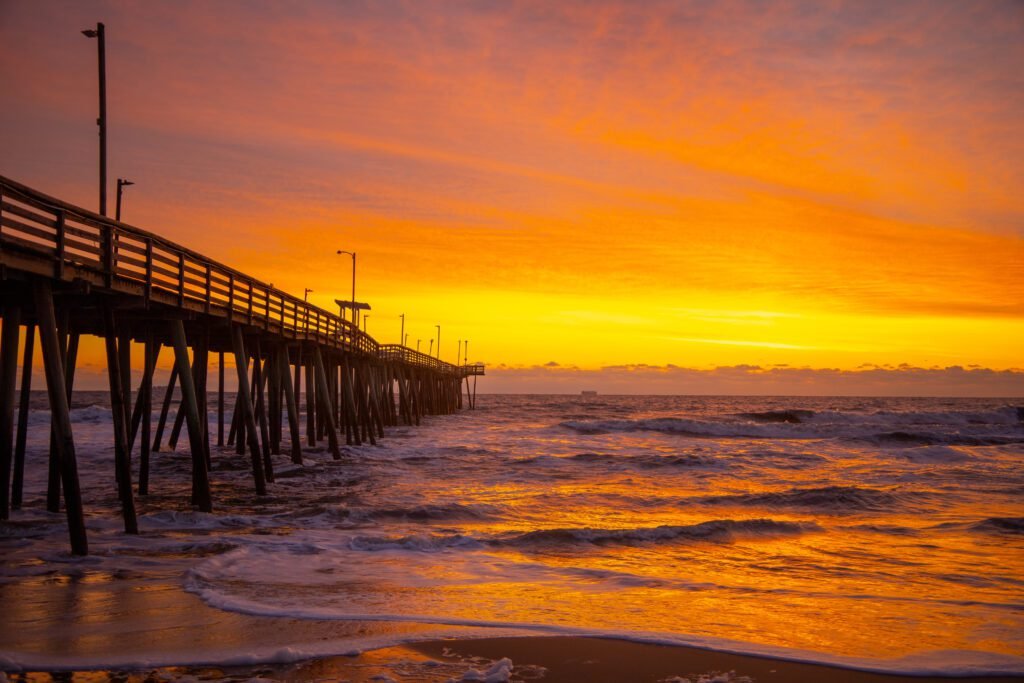
Things to do along the Virginia Beach Boardwalk
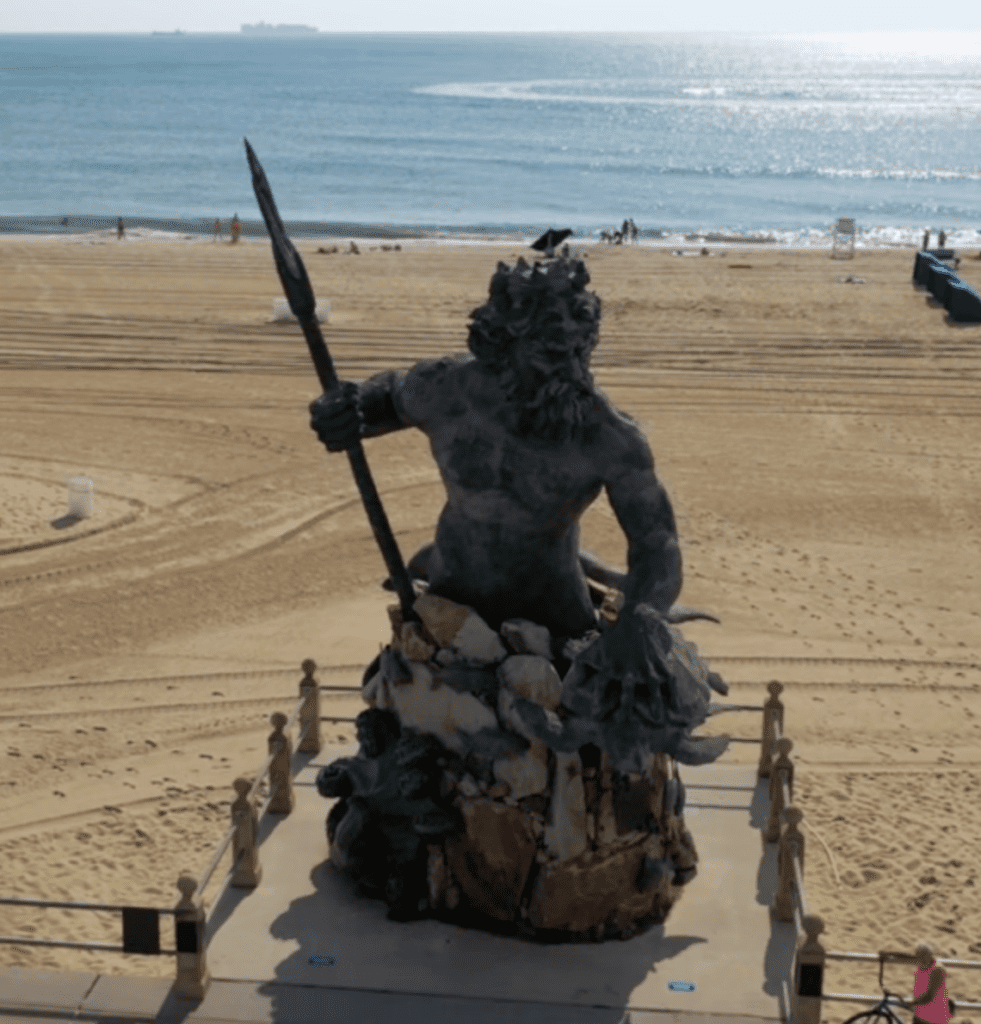
King Neptune at 31st Street: the bronze statue stands beside Neptune’s Park. It is an easy landmark for meeting friends and taking a photo. See the official King Neptune listing for its location. The picture above was taken from my drone of the statue.
Grommet Island at 2nd Street: this accessible oceanfront playground has wheelchair-accessible entrances, raised sand tables and play features designed for different abilities. Start here if the playground is your main reason for coming, rather than walking down from Neptune first. The City’s accessibility page describes the facilities.
Virginia Beach Fishing Pier: the tourism office lists it at 1413 Atlantic Avenue. It is a useful landmark for a walk through the southern half of the resort area. Pier hours and prices vary by season; check the official tourism listing and operator updates before building a fishing trip around it.
Two stops that add local history to your walk
Virginia Beach Surf & Rescue Museum, 2401 Atlantic Avenue: this is a useful stop near the middle of the Boardwalk for visitors interested in the coast’s lifesaving and maritime history. Pair it with a walk from Neptune toward 24th Street. Check the museum’s own website for current visiting information before making it your indoor backup.
Atlantic Wildfowl Heritage Museum, 1113 Atlantic Avenue: located in historic de Witt Cottage at 12th Street, it adds art, wildfowl heritage and carving demonstrations to a south-end outing. The museum lists free admission, with donations encouraged. Its Plan Your Visit page lists seasonal hours; confirm the schedule and demonstration availability rather than assuming the building is open every day.
These stops give you a reason to slow down between the bigger landmarks. Choose the one that fits your route instead of trying to walk from one end of the resort area to the other just to tick off attractions.
Choose a manageable walking route
- A short first visit: start at Neptune, walk south toward 24th Street and return. Add a meal nearby instead of trying to see both ends.
- A playground outing: start at 2nd Street, use Grommet Island and take a short northbound walk before heading back.
- A longer outing: follow the full three-mile route only if everyone is comfortable with the distance. Returning to the same starting point makes it roughly six miles before side trips.
These are suggested routes, not guided tours or guaranteed travel times. Allow extra time for photos, crossings, crowds and beach stops.
A half-day Virginia Beach Boardwalk itinerary
Start around 31st Street. Use the 31st Street Garage if driving, then head toward King Neptune. Take your photos and get oriented before walking south. Keep the first stretch simple: the ocean, the promenade and a few stops to enjoy the view.
Make 24th Street your first decision point. Visit the Surf & Rescue Museum if it is open and interests your group, or take a beach break. If anyone is getting tired, turn back here. You still have the return walk and a meal ahead of you.
Choose lunch before extending the route. Return toward Neptune for Catch 31 or another nearby restaurant. If the fishing pier is your priority, make that a longer southbound outing and plan lunch along that route instead. The pier and Grommet Island are separate destinations; seeing the pier does not mean you are already at the southern end.
Leave room for the return. Allow roughly three to four hours as a planning window for the shorter route with stops and a meal, not as a measured walking time. Restaurant waits, museum time and your group’s pace can change it. With young children, start at Grommet Island and use the shorter playground route above instead.
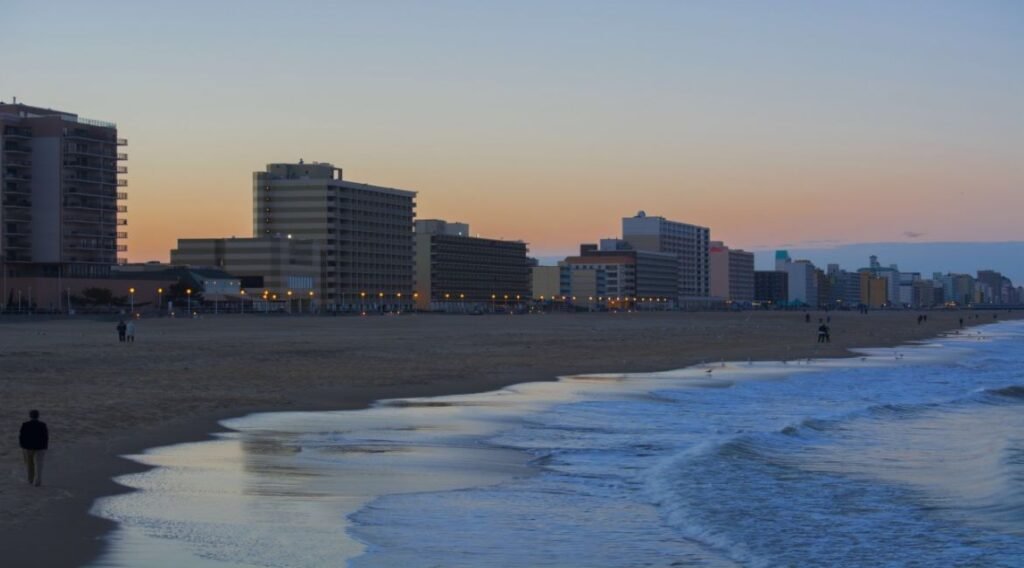

Moving To Hampton Roads Virginia?
Thinking about living near the Oceanfront? We can help you compare nearby homes with your commute, parking needs and preferred day-to-day setting. Contact DJ Parker and the Life in Hampton Roads team, call (757) 204-5827 or send a text.
Events and the best time for your visit
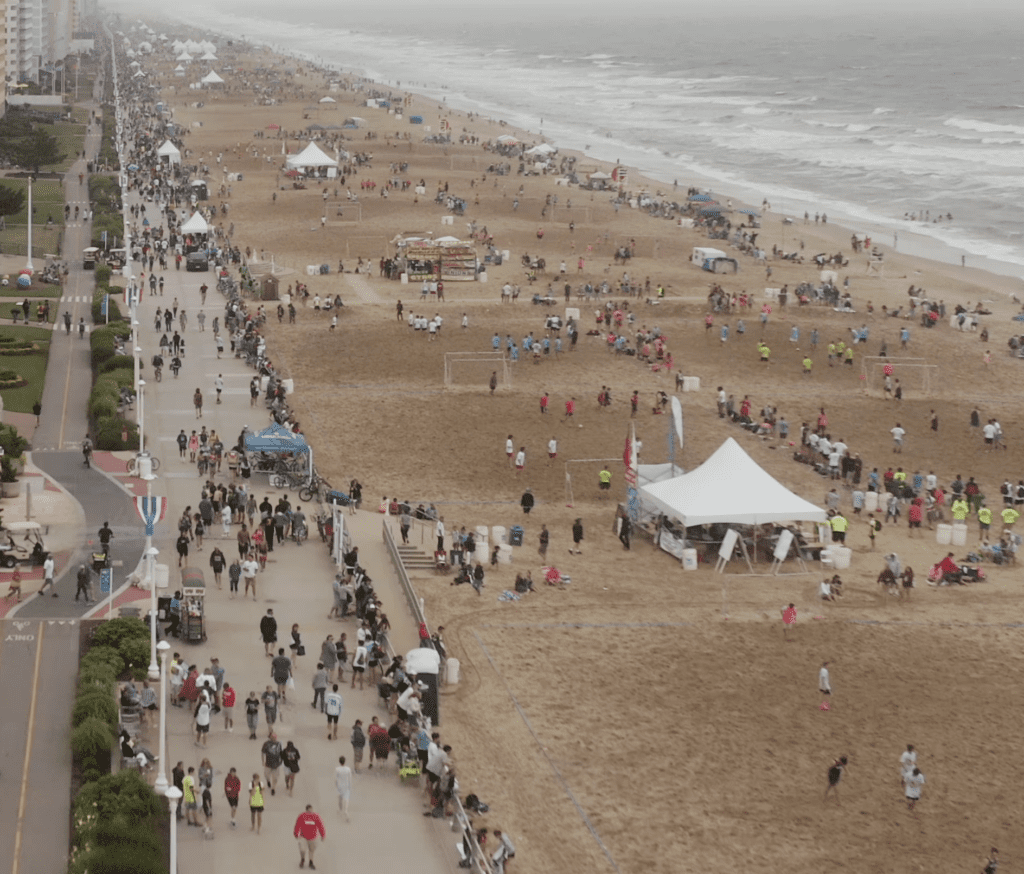
A concert or festival can change your parking plan and the feel of a visit. Check the official Beach Events calendar for dates, locations, admission details and updates before leaving home. Entertainment is seasonal; do not assume a stage has a show every night.
If you want a quieter walk, choose a day without a major event and try an early start. If the event is the reason for coming, choose parking based on its actual entrance, not simply the closest street number on a map. Leave extra time for road restrictions and the walk from your vehicle.
Bring a layer for an evening on the water and have an indoor backup for poor weather. Keep the return route in mind if you plan to walk several blocks before the show.
Summer, fall and winter visits feel different
For a summer visit to the Virginia Beach Boardwalk, decide whether your main goal is swimming, riding or an evening event. Trying to fit all three around a restaurant reservation makes the day harder to manage. Bring water and sun protection, and choose a meeting point by street number if your group separates. Do not use a hotel name as your only reference if everyone is unfamiliar with the area.
In the cooler months, plan around a walk, lunch and an indoor stop. The tourism office confirms the Boardwalk is open year-round, but that does not mean every attraction, rental stand or seasonal program operates on the same schedule. Check the museum and restaurant you actually want to visit before driving over.
For a rainy forecast, choose your indoor destination first and treat the walk as optional. A museum visit at 12th Street and a lunch reservation near 31st Street may look close on a city map, but they are not convenient substitutes for one another when your group is carrying beach gear.
Where to eat near your walking route
Choose a restaurant near the stretch of the Virginia Beach Boardwalk you are visiting. Two useful anchors at opposite ends are:
- Waterman’s Surfside Grille, 415 Atlantic Avenue: a south-end option with seafood and lunch, dinner and brunch menus. Check its current reservation policy directly, particularly for larger groups.
- Catch 31, at the Hilton, 3001 Atlantic Avenue: a seafood option beside Neptune’s Park. Its current menus help you compare breakfast, lunch and dinner before committing to a table.
These are location-based suggestions, not a ranking or a promise of availability. Check menus, accessibility needs and reservations with the restaurant. For a beach day, plan where your chairs and bags will go before arriving for a sit-down meal.
Walking and riding use different paths
The City directs bicycles and surreys to the separate bike path and roller skates and rollerblades to the Boardwalk. Keep an eye out when crossing between the promenade, bike path and street. Review the current Oceanfront rules before bringing an e-bike or other motorized device; disability-related exceptions apply.
Restrooms, accessibility and beach rules
Restrooms and beach access
The City lists permanent public restrooms at 2nd, 17th, 20th, 24th, 30th and 31st Streets. It also lists accessible beach walkways at 8th, 17th, 24th, 30th and 40th Streets. Use the City’s beach facilities guide to plan a stop. Check current conditions if you need a particular access point: a paved Boardwalk outing and a trip across the sand require different planning.
Dogs, beach gear and swimming
Dog rules change seasonally and differ between the Boardwalk and sand. From Memorial Day weekend through Labor Day weekend, the City’s current page allows leashed dogs on the Boardwalk from 6 a.m. to 7 p.m., but prohibits them on the resort-area sand and in the water between Rudee Loop and 42nd Street. Service-animal exceptions apply. After Labor Day and before Memorial Day weekend, pets may use the Boardwalk at any time, with leashes required.
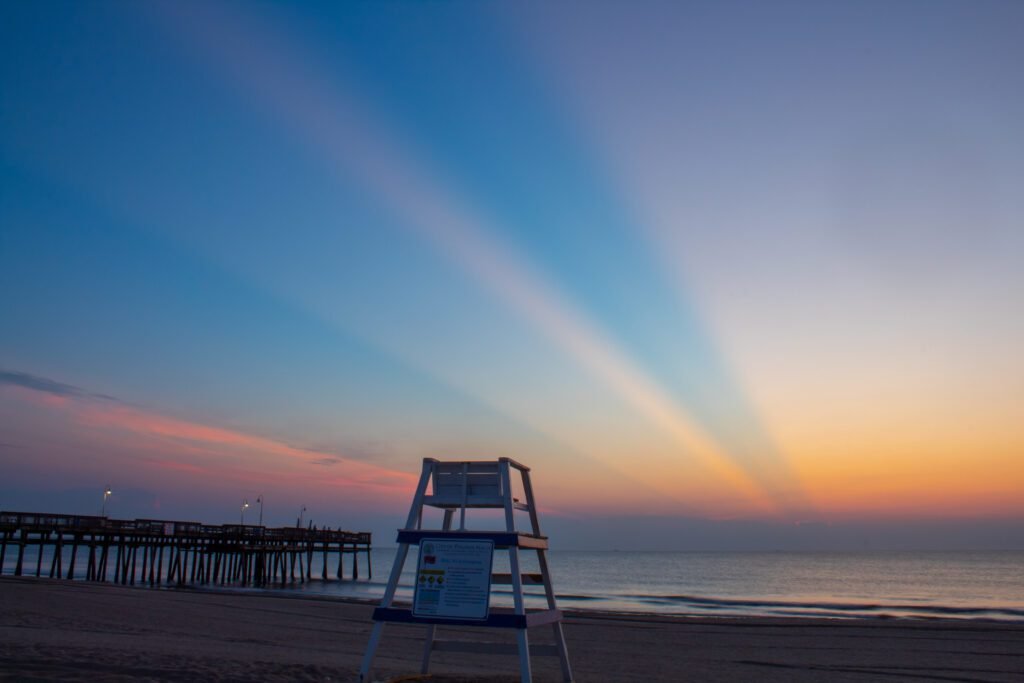
Glass and alcoholic beverages are prohibited in the public beach and Boardwalk areas except for permitted special events. Check the City’s beach rules and safety information before visiting, and follow posted swimming conditions and lifeguard directions. Lifeguard coverage is seasonal.
Virginia Beach Boardwalk questions
How long should I allow for the Virginia Beach Boardwalk?
For a short outing, plan around one destination and a nearby meal. A full end-to-end walk is three miles one way, so account for the return trip before setting out. Your pace, beach stops and the people with you matter more than a fixed itinerary.
Is Town Center on the Boardwalk?
No. Town Center is a separate inland district. If you want restaurants, shopping and shows away from the beachfront, see our Virginia Beach Town Center guide.
Thinking about living near the Virginia Beach Boardwalk?
The useful question is how often you would use this setting during an ordinary week. Someone who wants a regular morning walk may value a different block from someone who mainly comes down for dinner or a concert. Walk the route from the actual home entrance to the beach rather than judging convenience from the listing’s distance alone.
- Test your everyday trips. Drive to work at the time you would normally leave, then try a grocery run and the return home. Repeat your visit on an event evening to see whether the approach to the property still works for you. If you are moving on military orders, use our Virginia Beach Navy bases guide to compare installation locations and commute considerations.
- Inspect the parking arrangement. Ask where your assigned space is, how guests park, whether there is room for a second car and how deliveries reach the building. A nearby public garage does not answer those questions.
- Listen from inside and outside. Spend time in the unit and on any balcony. Ask about nearby event schedules and visit again at a different hour. Noise tolerance is personal, so make that comparison yourself.
- Picture the trip back from the sand. Look for a practical place to store chairs and bikes, rinse sandy equipment and carry groceries. Confirm the building’s pet and storage rules if those affect your routine.
Before choosing a property, review its association documents, maintenance responsibilities and property-specific insurance information with the appropriate professionals. We can help organize the neighborhood comparison and identify questions to ask, without assuming every Oceanfront building offers the same experience. Our Virginia Beach cost-of-living guide can help you build a broader budget beyond the purchase price or rent.
For a broader look at the city, explore our guide to Virginia Beach areas. For a step-by-step approach to choosing a location and getting settled, read our practical guide to moving to Virginia Beach. When you are ready to discuss a move, contact our team or call (757) 204-5827.