Moving to Virginia Beach: A Practical Relocation Guide
By DJ Parker | Updated October 22, 2026
Thinking about moving to Virginia Beach? There’s a lot to look forward to here, but choosing where to live takes more than finding a house you like near the water.
Where will you work? What will your normal drive look like? Do you want to walk to the beach, or are you perfectly happy driving there on the weekends? And what will your housing budget actually cover once you include the other expenses?
Having lived in the Hampton Roads area for over 30 years, I can tell you those questions matter. The location that works for someone stationed at Oceana might be a completely different choice for someone working in Norfolk.
Here’s how I would approach your move, from narrowing down the location to getting settled once you arrive.

Start with your commute
Before you spend too much time saving houses online, figure out where you’ll need to go most days.
Put your workplace, regular appointments, and other important stops on a map. Then check the drive from the homes you’re considering during the hours you would actually travel.
I would also suggest testing that drive during your house-hunting trip. Do the morning trip and the return trip if you can. A quiet Sunday afternoon drive won’t necessarily tell you what your workweek will feel like.
If your route involves a bridge or tunnel, give that part of the commute extra attention. Think about how much flexibility you have when there’s a delay.
And if you’re moving here on military orders, get the specific worksite and likely gate from your sponsor. Searching for the base name alone may take you somewhere different from where you’ll actually report.
My guide to the Virginia Beach Navy bases is a good starting point for comparing those locations.
Decide what you want from your location
When people ask me where they should live in Virginia Beach, my first question is what they want their everyday life to look like.
Being close to the beach sounds great. But does that mean walking over in the morning, driving over after work, or going a couple of times a month?
Those are different priorities, and they can lead to different home searches.
As you explore, compare places such as the Oceanfront, Shore Drive, Sandbridge, Town Center, Great Neck, Kempsville, and Red Mill. Treat those names as starting points. Look at the actual property, the surrounding streets, and the trips you’ll regularly make.
For each home, ask yourself:
- How will I get to work?
- Where will I buy groceries and run errands?
- Is the beach access I want actually convenient?
- Does the property have the parking, outdoor space, or home-office setup I need?
- What maintenance responsibilities am I comfortable taking on?
If you’re considering a property near the water, check the route to a public access point. Being close on a map doesn’t necessarily mean you can walk straight onto the beach.
You can also explore my Virginia Beach beach guide and Town Center guide as you get familiar with the city.

Build your budget around the full housing cost
The purchase price or advertised rent is only part of the picture.
If you’re buying, compare the mortgage payment, property taxes, insurance, association fees, utilities, and maintenance. Check what your lender has already included in the payment estimate so you don’t count taxes and insurance twice.
If you’re renting, ask about utilities, parking, pet charges, deposits, and any other required fees before comparing properties.
What does the housing market look like right now?
According to REIN’s September 2026 report, the median sales price across its Hampton Roads market was $375,000, and active residential listings were up 16.17% from September 2025. Virginia Beach’s median sales price increased 8.4% year over year. The $375,000 figure is regional—it is not the Virginia Beach city median. Source: REIN’s September 2026 market report.
My takeaway: there are more homes to compare across the region, but that doesn’t mean every home or neighborhood offers the same negotiating opportunity.
For your search, I would look at recent comparable sales and available homes in your price range. A citywide or regional number can give you context, but it won’t tell you what a particular house should cost.
Check expenses for the actual property
For property taxes, review the home’s assessment and current tax information through the Virginia Beach Treasurer’s real estate resources. Don’t assume the seller’s current payment will be your future payment.
For a condo or a home with an association, review the dues, what they cover, the rules, and any assessments.
Get insurance quotes early, too. Two homes with similar asking prices can have different ongoing costs.
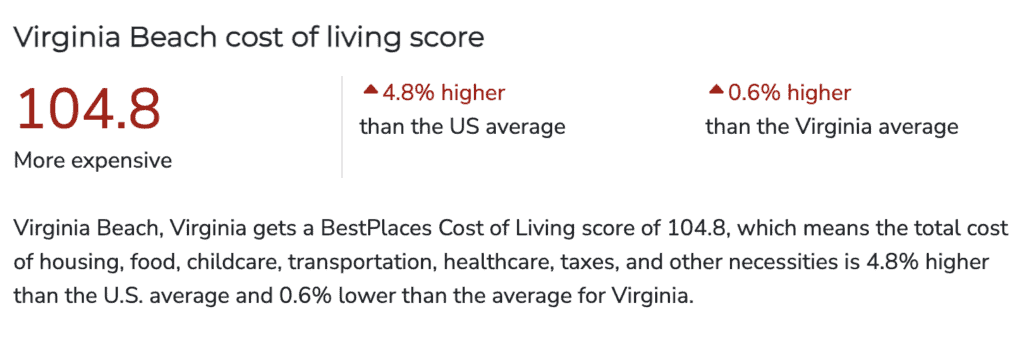
My Virginia Beach cost-of-living guide can help you think through the broader budget.

Check jet noise before choosing a home
This is something I would absolutely pay attention to when moving to Virginia Beach.
Start with the address and review the city’s Air Installation Compatible Use Zone information, usually called AICUZ. It covers aircraft noise and accident-potential zones. The city also explains disclosure requirements for residential properties within those designated zones. Virginia Beach AICUZ information.
Then spend time at the property. Listen inside and outside, and visit at different times when possible.
Think about how you’ll use the home. Will you be taking work calls all day? Spending a lot of time in the backyard? Trying to sleep during daytime hours?
People have different comfort levels with noise. One quiet showing won’t tell you everything, so make this part of your research before you commit.
Look into flood risk and storm preparation
Don’t assume that a property is free of flood concerns because it isn’t directly on the beach.
The city recommends checking FEMA’s flood maps and points out that properties outside a mapped Special Flood Hazard Area can still flood. Start with the city’s property-protection resources.
For any home you’re seriously considering, ask about drainage, available flooding history, and insurance options. Review those questions with your inspector, insurance professional, and other appropriate specialists.
I would also check your hurricane evacuation zone before moving in. Virginia’s Know Your Zone tool lets you look up your address and helps you follow evacuation directions during an emergency.
Your evacuation zone and your flood zone serve different purposes, so check both.
Research schools using the property address
If school assignments are part of your move, use the Virginia Beach City Public Schools School Locator.
Search the specific address instead of relying only on a listing description or neighborhood name. The school division notes that official assignments are confirmed during registration.
From there, contact the schools about the programs, services, transportation, and enrollment requirements that matter to your household.
I would build that research into your home search early so you have time to get your questions answered.
Decide whether renting or buying fits your plans
You don’t have to make the same choice as everyone else moving here.
Renting may give you time to learn the area, experience the commute, and decide what you want long term. Buying may make sense when the costs, timeline, and property fit your plans.
If you’re coming on military orders, think about what could happen at your next assignment. Would you want to sell? Could you manage a rental property? Would you prefer the flexibility of a lease?
Those questions deserve a closer look than simply comparing rent with a mortgage payment.
My renting-versus-buying guide walks through more of the considerations.
Arrange utilities before moving day
Once you have a confirmed move-in date, start arranging services.
Check with your landlord, seller, or association first so you understand which services you’re responsible for and which are included.
These are useful starting points:
| Service | Where to start |
|---|---|
| Electricity | Dominion Energy’s start, stop, or move service page |
| City water and sewer account requests | Virginia Beach Public Utilities Online Services |
| Natural gas, if the property uses it | Virginia Natural Gas service requests |
| Internet | Check availability and installation appointments for the exact address |
Schedule ahead and confirm the start dates. If you work from home, I would make the internet appointment a priority.
Also check trash pickup arrangements, mailbox access, parking rules, and any move-in requirements for your building or association.
Put vehicle paperwork on your moving checklist
If you’re establishing Virginia residency, the DMV generally requires a Virginia driver’s license within 60 days, with vehicle titling and registration within 30 days. Commercial licenses have a shorter deadline. Check the Virginia DMV’s new-resident guide for the requirements that apply to you.
If you’re here on military orders or have a different residency situation, confirm the applicable rules directly with DMV before changing your documents.
Handle this early so it doesn’t get lost between unpacking boxes and starting work.
Your Virginia Beach moving checklist
Here’s the order I would use to keep the move manageable:
- Set your priorities. Write down your budget, move date, work location, and three most important housing needs.
- Compare locations. Check commutes and everyday errands from the actual homes.
- Research the property. Review noise zones, flood information, insurance, association documents, and school assignments where relevant.
- Confirm the numbers. Compare the full monthly costs and upfront expenses.
- Arrange the move. Book movers, confirm access, and schedule utilities and internet.
- Prepare for arrival. Forward mail, organize important documents, and make a storm plan.
- Get settled. Complete applicable vehicle paperwork and explore the places you’ll use regularly.
Leave yourself some room to enjoy the move, too. Once the essentials are handled, go explore. Try a beach access you haven’t visited, take a walk, or find a restaurant you want to come back to.
That’s part of figuring out what living here will look like for you.

Frequently asked questions about moving to Virginia Beach
Where should I start my home search?
Start with your work location, budget, and everyday priorities. Then compare specific homes and routes. A neighborhood name alone won’t tell you whether a location works for your schedule.
Do I need to live near the Oceanfront to enjoy the beach?
No. Decide how often you want to go and whether walking access matters. If you’re comfortable driving, you can consider a wider range of locations while checking the travel and parking involved.
What should I check before buying a home here?
Along with the condition and price, investigate commute, aircraft noise, flood risk, insurance costs, association obligations, and any other property-specific concerns.
Should I rent before buying?
That depends on your timeline, budget, and familiarity with the area. Renting can give you time to explore, while buying deserves a careful look at ownership costs and how long you expect to keep the property.

Thinking about moving to Virginia Beach?
Our team talks to people planning a move to Hampton Roads all the time, and we absolutely love helping them figure out where to start.
Tell me when you’re moving, where you’ll be working, and what matters most in your next home. We can talk through the locations and properties that make sense for your plans.
Call or text me at (757) 204-5827, or contact our team here.
I’m DJ Parker, and I’d love to help you get to know Virginia Beach before you make your move.